By Day Kim
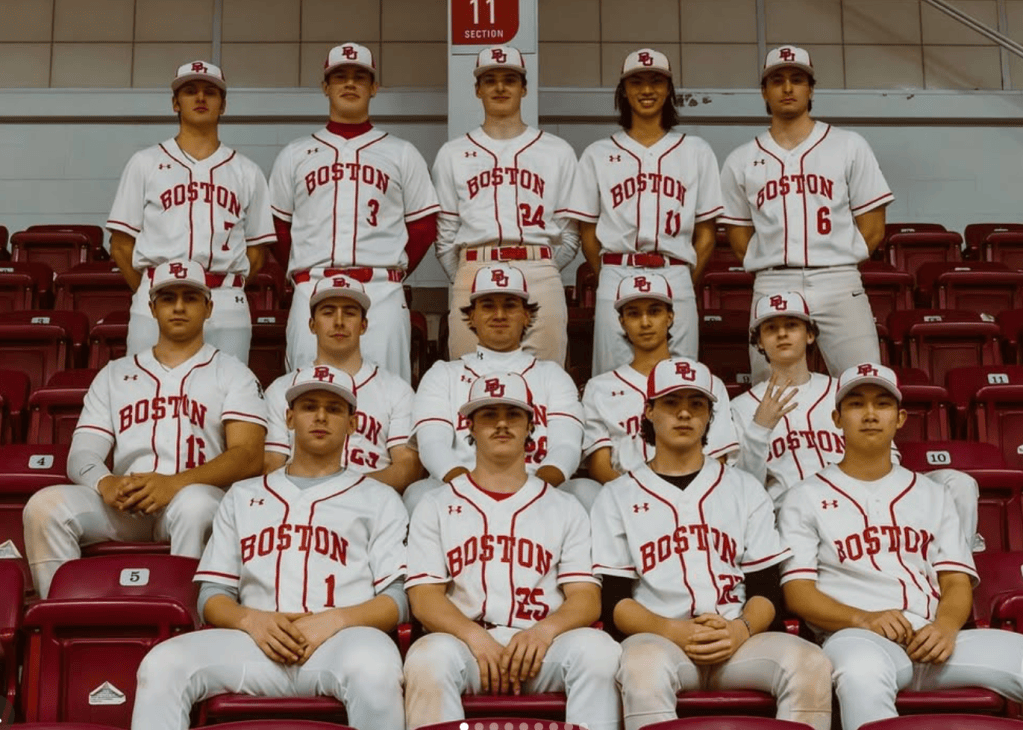
Baseball has always been one of the few sports I consistently followed growing up. I kept up with professional teams, watched games regularly, and paid attention to players throughout the season. However, after coming to Boston University, I realized that I knew almost nothing about BU’s own baseball team. I had never attended a game, and I would not have been able to name a single player on the roster.
That realization raised a larger question about college sports on campus. While many students at BU follow professional sports closely, college teams themselves often receive far less attention. Teams like hockey are highly visible within the university community, but BU baseball exists much more quietly in the background. According to former team captain Brendan Galvin, many students are not even aware that the team exists.
Before speaking with Galvin, I assumed the team would reflect a more traditional college sports environment. I expected something highly competitive and performance-driven, similar to varsity athletics. Instead, what stood out most was how naturally he described the team culture as something centered less on pressure and more on simply continuing to play the game.
Unlike varsity teams, BU baseball is entirely student-run and operates differently from larger athletic programs on campus. Practices are usually held several nights a week from around 8 to 10 p.m. on the outdoor field near West Campus. Players balance practices with classes and other responsibilities, especially during demanding periods of the semester.
Galvin, who has played baseball since he was five years old, said one of the reasons he chose BU was because he wanted to continue playing while still focusing on academics. However, when describing the team itself, he emphasized enjoyment rather than competition.
“People are just having fun practicing,” Galvin said.
He described the environment as relaxed, where players come to practice, spend time together, and continue playing a sport that has remained part of their lives for years. Some of his favorite moments were not tied to major games or victories, but to smaller routines, like getting to know teammates better or simply walking home after practice.
That perspective stood out because it contrasts sharply with how sports are often presented today. Through PR classes and discussions surrounding sports marketing, I have become increasingly aware of how closely modern sports are connected to business, visibility, sponsorships, and audience engagement. In many cases, sports are framed through competition, branding, and performance.
The contrast became even more interesting when compared to how sports are often discussed culturally. In his 1945 essay, George Orwell argued that serious sports had become closely tied to nationalism, ego, spectatorship, and competition. Orwell famously described sports as “war minus the shooting,” suggesting that modern sports are often driven less by enjoyment and more by pride, visibility, and the desire to win in front of an audience. Even spectators, Orwell argued, become emotionally invested in the idea of victory and humiliation.
BU baseball seems to exist outside of that structure. The team practices at night on a relatively quiet field near West Campus, often without much attention from the larger student body. Instead of emphasizing pressure or performance, Galvin repeatedly described the team culture as relaxed and centered on enjoyment.
In many ways, the team exists without the elements that often define modern sports culture: large audiences, major recognition, media attention, or strong financial incentives. Yet players continue to show up several nights a week simply because they want to keep playing.
This raises a broader question about what role spectators actually play in defining sports. If nobody is watching, what continues to make the game meaningful?
At least in the case of BU baseball, the answer may simply be the act of playing itself.

