by Day Kim
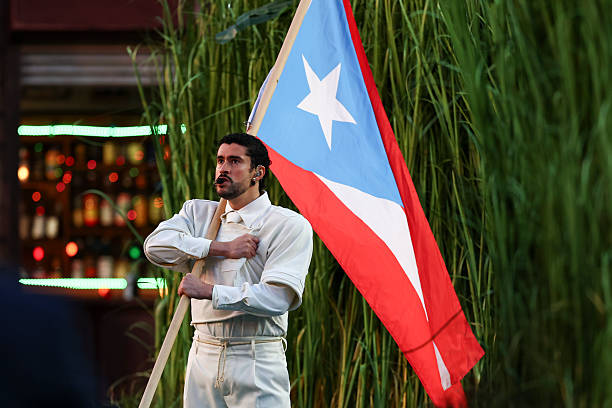
I am not technically an immigrant, but I have lived in the United States for almost a decade as someone who is not American, and during that time I learned how important it is in this country to respect cultural differences and take pride in where you come from. Especially at a time when immigration enforcement feels harsher than ever, seeing Bad Bunny so unapologetically center Latin American identity on one of the biggest stages in the country felt close to extraordinary.
Maybe this comes from my own background. I grew up in a culture where people, especially Koreans, are not particularly encouraged to engage deeply with cultures outside their own, and because of that I never felt much curiosity toward places or traditions that did not directly affect me. My knowledge of Latin American culture was practically nonexistent. But during those ten minutes of the halftime show, I felt as if I had briefly stepped into a world I had never really tried to understand before. Even though every lyric was in Spanish and I could not follow the words, the performance itself, the flow of the staging, and the clarity of the storytelling carried the meaning in a way that did not require translation. I found myself paying less attention to the music and more to the spectacle as a cultural experience.
At the same time, I understand why some viewers felt excluded. The Super Bowl halftime show is one of the most widely watched events in the United States, and performing almost entirely in a language many viewers do not understand can easily leave people confused rather than moved. It raises an uncomfortable question about what we expect from a national spectacle. In a country that prides itself on diversity, embracing cultures beyond one’s own is often framed as a moral obligation, but in reality, it can feel more like a voluntary act of empathy than a requirement. For some, this performance may have felt less like an invitation and more like an assumption that everyone should already understand.
The backlash did not stay limited to confused viewers. President Donald Trump publicly criticized the performance on X, calling it terrible and arguing that it did not represent American values. He also complained that much of the show was in Spanish, suggesting that audiences could not understand it. His reaction shifted the conversation from a cultural moment into a political one almost immediately. What had felt like an artistic expression of identity was suddenly framed as a question of who belongs on a stage meant to represent the nation. Seeing the performance discussed in those terms made the tension I had felt earlier seem less personal and more structural, as if celebrating one culture could easily be interpreted as rejecting another.
That tension is what stayed with me after the show ended. Representation can be powerful, but it can also expose the limits of how far audiences are willing to follow. What felt meaningful and affirming to one group may have felt alienating to another, and both reactions can exist at the same time. The performance did not fall because some people did not understand it, but it also did not succeed universally simply because it was bold.
The next day, I noticed how quickly the conversation around the show hardened into simple reactions online. Some people dismissed it as confusing, others praised it as historic, and very few seemed interested in the space in between. Watching those responses unfold felt like a reminder of how uncomfortable ambiguity can be. It is easier to label something as either a success or a failure than to sit with the possibility that it might be both. In that sense, the halftime show did not just expose cultural differences on stage but also the limits of how we talk about them afterward.
If anything, the halftime show forced me to confront how limited my own perspective had been. I had spent years living in a country built on diversity while still engaging with only the parts that felt familiar to me. For ten minutes, I experienced what it meant to encounter a culture without the comfort of full understanding, and it made me realize that this is what many people navigate every day. Cultural pride can create connection, but it can also require patience from those on the outside. Maybe the goal is not immediate comprehension but the willingness to stay curious even when something does not feel made for you. That, more than the performance itself, is what I am still thinking about. Maybe understanding was never the point.

