Harvard Graduation Ceremony Disrupted by Mass Walkout Protesting Gaza War
By Dahye Kim
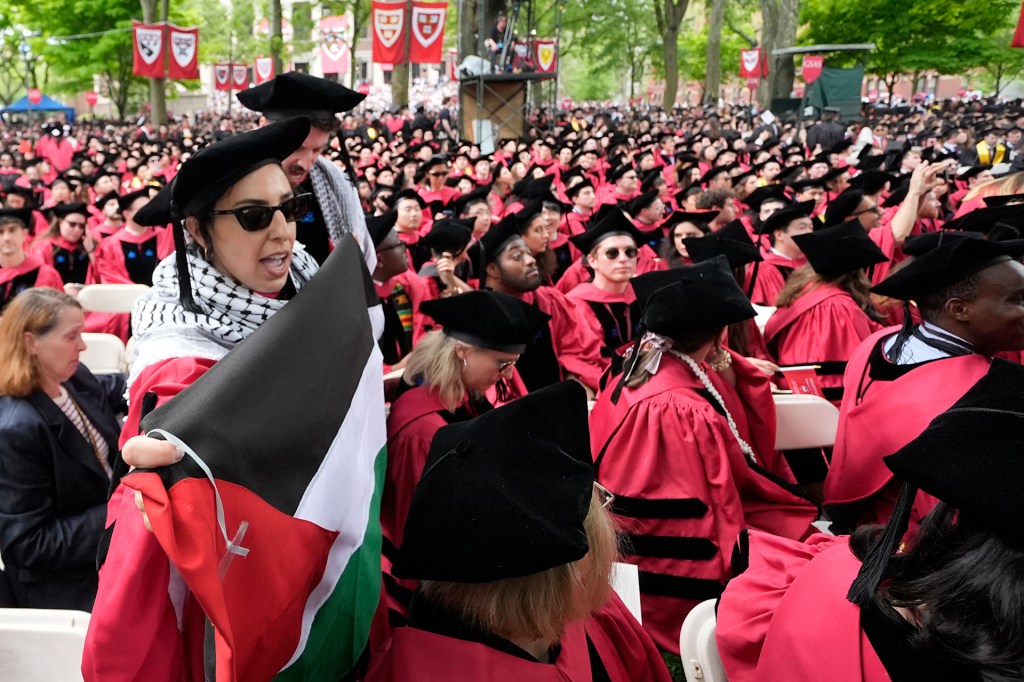
Harvard University’s commencement ceremony took an unexpected turn on the morning of May 23 when hundreds of graduates staged a walkout in protest against the ongoing conflict in the Gaza Strip. The New York Times reported that the protest was triggered by the university’s decision to withhold the graduation of 13 students involved in a campus sit-in against the war.
The ceremony in Harvard Yard, with 9,262 graduates and their families present, proceeded as Interim President Alan Garber began conferring degrees. “Some among us may choose to take the liberty of expressing themselves to draw attention to events unfolding in the wider world,” Garber said, according to the New York Times.
Suddenly, a significant portion of the graduates rose from their seats, chanting slogans such as “Harvard out of occupied Palestine” and “Free Palestine.” Among them, a student donned a traditional Palestinian keffiyeh over their gown, symbolizing solidarity with the Palestinian cause.
This mass exodus directly responded to the administration’s disciplinary actions against 13 students who had participated in a tent sit-in protest. The sit-in was part of a broader movement opposing the Israeli military actions in Gaza. These students had hoped to graduate, but the university’s stance led their peers to voice their support through this dramatic exit.
An undergraduate representative, Shruti Kumar, vocally criticized the administration, stating, “Freedom of expression and expressions of solidarity have become subject to punishment, making their graduation uncertain. I am disappointed by the university’s narrow-minded attitude toward the right to civil disobedience on campus.” Kumar’s remarks highlighted the broader sentiment among the student body that the university had failed to endorse the principles of free speech and peaceful protest.
Initially, Harvard had reached an agreement with the protesting students, promising to allow them to graduate if they ended their protest by May 14. However, the students claimed that the university reneged on this agreement, leading to heightened tensions and the subsequent walkout. The university administration has yet to provide a detailed response to these allegations.
Following the walkout, the protesting students and their supporters gathered at a nearby church in Harvard Square to conduct an alternative graduation ceremony. This impromptu event underscored their determination to celebrate their academic achievements while standing firm in their political convictions.
Harvard is not alone in experiencing disruptions related to the Gaza conflict. Similar protests have occurred at other prestigious institutions across the United States. On May 4th, around 75 anti-Israel demonstrators interrupted the University of Michigan’s graduation ceremony. Additionally, on May 12, approximately 40 students walked out of Duke University’s commencement. At Virginia Commonwealth University, about 60 graduates exited the ceremony in protest while Governor Glenn Youngkin delivered a speech.
These incidents reflect a growing trend of student activism in response to international conflicts, signaling a significant shift in how academic institutions handle political dissent. The walkouts and protests at various universities are part of a larger narrative of students demanding that their institutions take a clear stance on global issues, particularly those involving human rights and military actions.
Harvard’s decision to withhold the graduation of the 13 students has sparked a debate on the limits of academic freedom and the rights of students to engage in civil disobedience. Critics argue that the university’s actions undermine the principles of free speech and peaceful protest that higher education institutions should protect.
The broader implications of these events are still unfolding as universities nationwide grapple with balancing disciplinary policies and accommodating student activism. The protests highlight the ongoing struggle within academic communities to reconcile institutional policies with the values of free expression and political engagement.
As the graduates who walked out return to their lives beyond Harvard Yard, their actions on May 23 serve as a reminder of the enduring impact of student activism and the continuing debate over the role of universities in addressing global conflicts.

